

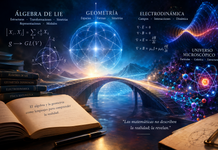
“A scientific congress is the moment when the universe ceases to be merely an object of study and becomes a shared conversation among the minds that seek to understand it.”
The understanding of the universe has, historically, been an enterprise of conceptual unification. From the formulation of the law of universal gravitation by Isaac Newton to the revolutionary theory of general relativity by Albert Einstein, physics has sought to integrate seemingly disparate phenomena within coherent frameworks.
Today, we find ourselves in a context of unprecedented conceptual expansion, where most of the cosmos remains invisible and its deep structure challenges our most established theories. In this setting, the International Conference on Advances in Gravitation, Astrophysics and Cosmology (ICAGAC2026), to be held on 23 and 24 September 2026 in Berlin, Germany, constitutes an essential forum for addressing these emerging challenges.

ICAGAC2026 offers a privileged space for the rigorous exchange of ideas among researchers, scientists and academics from around the world. Through keynote lectures, invited talks, oral presentations and poster sessions, the meeting fosters interaction between theory, experimentation and observation, encouraging the creation of new alliances and networks of scientific collaboration; for participants attending in two modalities, on site and virtual.
This platform not only strengthens the individual progress of researchers, but also ensures the continuity of the intellectual tradition that unites gravitation, astrophysics and cosmology within a shared project of knowledge.
I include the link for further information about the International Conference on Advances in Gravitation, Astrophysics and Cosmology (ICAGAC2026):
https://astrophysics2026.pagesconferences.org/organizing-committee
Within the scientific domain, the frontier themes of contemporary cosmology reveal the complexity and richness of our universe.
Dark matter, for example, manifests itself through its gravitational effects on the rotation of galaxies and the formation of large-scale structures, although it remains invisible to electromagnetic radiation. Understanding its nature entails exploring particle physics beyond the Standard Model, considering the role of exotic particles such as neutrinos, whose minute yet non-zero mass decisively influences the dynamics of the early universe.
In a complementary manner, dark energy, responsible for the acceleration of cosmic expansion, reshapes our understanding of the fate of the universe and challenges the validity of classical gravitational models. Scenarios such as De Sitter universes provide fundamental mathematical frameworks, while also inviting consideration of possible extensions of theory beyond the standard paradigm.
Cosmic inflation, conceived to explain the observed homogeneity and flatness, connects the physics of the early universe with high-energy theories, including superstring models, in which fundamental particles emerge as vibrational modes of one-dimensional structures. This approach offers a possible reconciliation between quantum mechanics and gravitation, a central challenge of modern physics.
Quantum chromodynamics, for its part, illuminates processes under extreme conditions, such as those prevailing in neutron stars, where exotic phases of matter emerge and theoretical concepts such as skyrmions acquire relevance.
Interstellar objects and astrophysical phenomena provide natural laboratories in which to test these theories. Pulsars make it possible to evaluate relativity in extreme regimes; radio quasars reveal the energetic activity of supermassive black holes; interstellar masers act as precise tracers of star-forming regions; and cosmic rays carry information about particle acceleration processes at energies unattainable on Earth.
These objects are not isolated subjects of study, but nodes within a conceptual network that seeks to understand the integral coherence of the cosmos.
Likewise, space-time singularities, where physical quantities diverge and classical description collapses, delineate the limits of our current theories and motivate the development of quantum gravity frameworks.
In this context, the exploration of antimatter, possible tachyons and new fundamental symmetries assumes a speculative yet intellectually fertile role, underscoring the conceptual richness of contemporary cosmology.
In conclusion, the science of the universe today is not confined to empirical observation; it stands as an interdisciplinary theoretical laboratory in which particle physics, differential geometry, thermodynamics and quantum field theory converge.
Each frontier (dark matter, dark energy, inflation, neutrinos, superstrings, torsion, singularities) represents a node within a conceptual network that seeks to comprehend the evolution and coherence of the cosmos.
ICAGAC2026 not only reflects this spirit of exploration, but also invites the scientific community to contribute actively to the construction of a new cosmology, extending the horizons of our knowledge and consolidating a shared intellectual legacy.
“May this International Congress be not merely a meeting of theories and observations, but a point of convergence where human intelligence engages in dialogue with the vastness of the cosmos, reminding us that every shared equation and every debated idea are, in essence, acts of exploration towards the infinity we strive to comprehend.”